Technical Frameworks Connecting Affiliate Referrals to Progressive Pools and Secured Transactions in Gaming
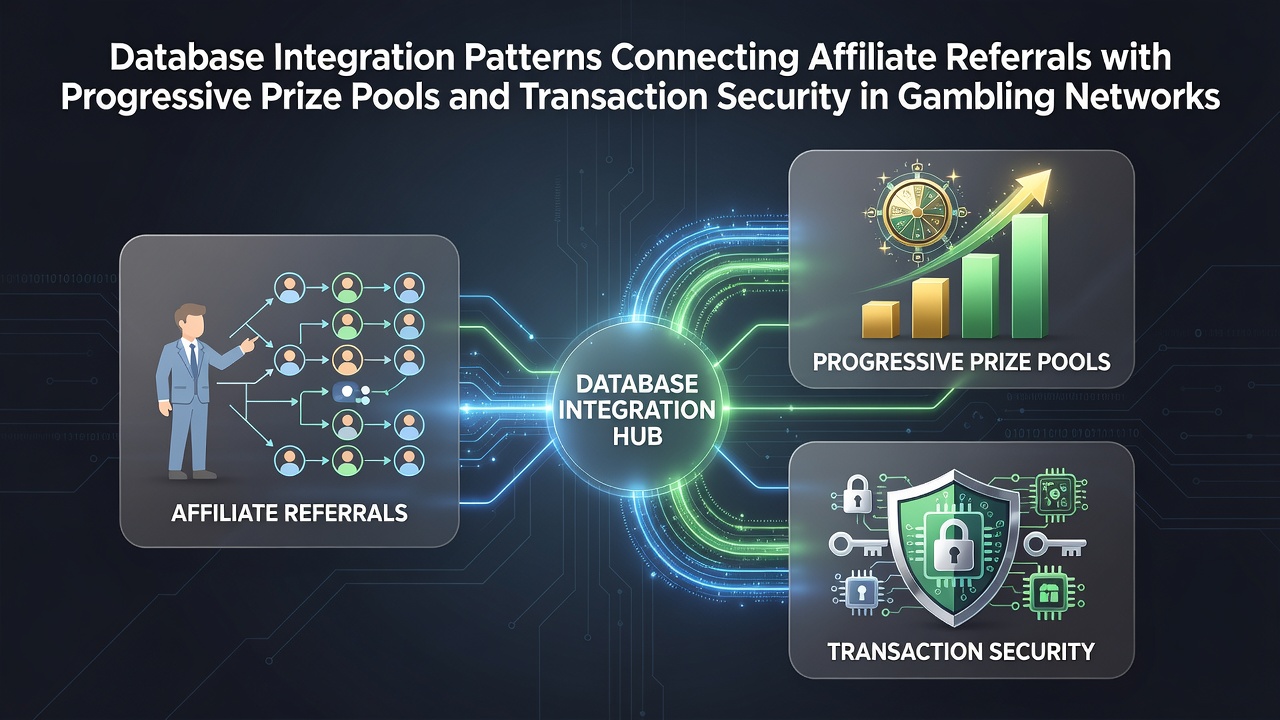
Database integration patterns in gambling networks handle the flow of data between affiliate referral systems, progressive prize pools, and transaction security modules. These patterns rely on relational and distributed database architectures that synchronize user acquisition records with jackpot accumulation engines while maintaining encryption standards for financial movements. Researchers have documented how centralized schemas track referral commissions alongside real-time contributions to shared prize funds, and separate schemas isolate payment ledgers behind multi-factor authentication layers.
Referral Tracking Through Structured Data Models
Affiliate programs generate unique identifiers for each referred player, and these identifiers feed into normalized tables that record sign-up events, deposit activity, and lifetime value metrics. Database designers often employ event-sourcing patterns so that every referral action writes an immutable record, allowing downstream systems to calculate commissions without duplicating raw transaction data. In November 2026 several large operators updated their schemas to include time-stamped referral validation fields, which reduced duplicate credit claims reported by network administrators.
Observers note that graph database extensions now supplement traditional SQL stores when mapping complex referral trees that span multiple jurisdictions. These extensions store relationships between sub-affiliates and master accounts, enabling queries that calculate tiered payouts while preserving data lineage for audit purposes.
Progressive Prize Pool Synchronization
Progressive jackpot systems require continuous aggregation of small percentages from qualifying wagers across multiple games and operators. Database integration uses distributed ledger-style tables or partitioned databases that commit micro-contributions in near real time, then broadcast updated pool totals to player-facing interfaces. Transaction logs feed these contributions through triggers that enforce atomicity, ensuring no wager contributes twice or skips the pool entirely.
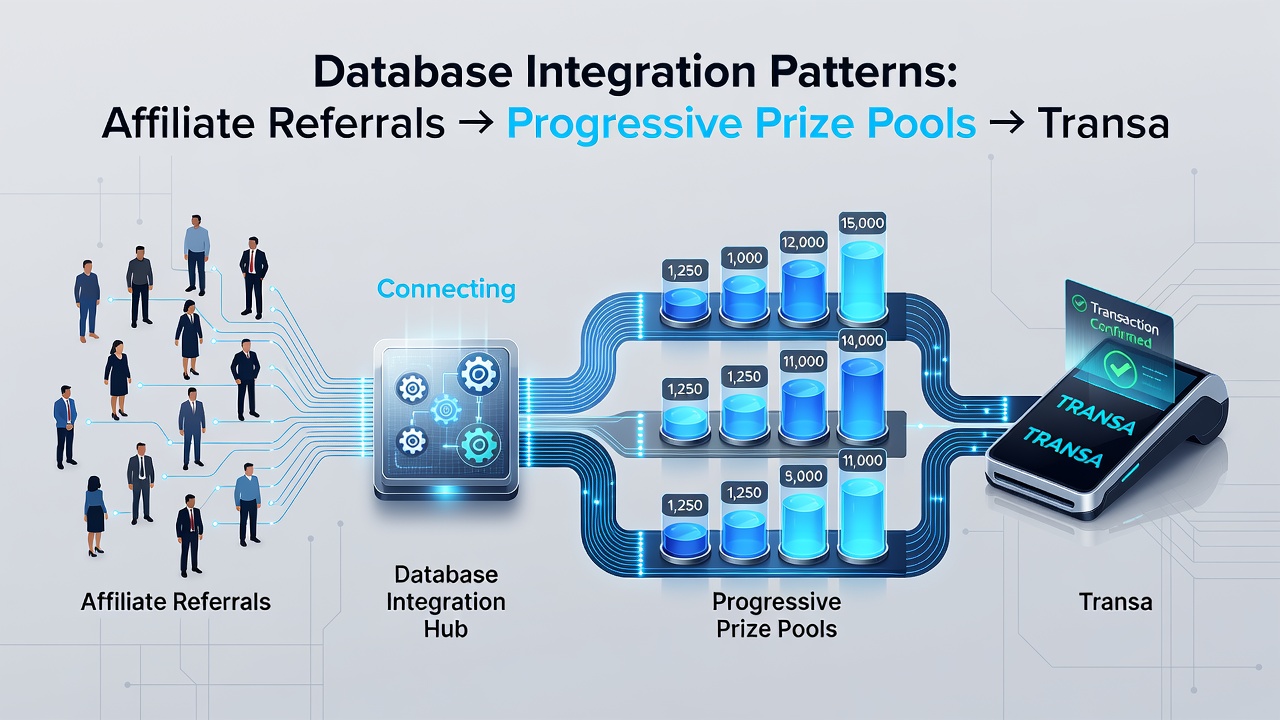
Studies from academic research groups have examined how eventual-consistency models balance the need for rapid jackpot growth displays against the requirement for exact reconciliation at payout moments. One documented implementation partitions pool data by region, allowing independent contribution streams to merge only after regulatory checksum verification completes.
Security Layers Around Financial Data Flows
Transaction security integrates through separate database schemas that encrypt sensitive fields at rest and in transit using standards such as AES-256 and TLS 1.3. Role-based access controls limit which services can read full payment details, while tokenized references allow referral and jackpot systems to reference transactions without exposing card or account numbers. Audit trails capture every read and write operation, satisfying requirements set by bodies including the Nevada Gaming Control Board and the Australian Transaction Reports and Analysis Centre.
Network architects frequently implement database firewalls and anomaly detection routines that flag irregular patterns such as sudden spikes in referral-linked deposits or mismatched jackpot contribution totals. These routines operate on materialized views refreshed every few seconds, providing operators with immediate visibility into potential discrepancies.
Integration Patterns Across Systems
Common patterns include change-data-capture pipelines that stream referral events into jackpot calculation engines and payment gateways. Message queues decouple the three domains so that a delay in one area does not stall the others. Containerized microservices query these queues and apply business rules stored in configuration tables, allowing operators to adjust commission rates or contribution percentages without altering core database code.
Industry reports from the European Gaming and Betting Association describe how operators test these pipelines through controlled failover drills that simulate regional outages. Results show that properly indexed foreign-key relationships between referral, pool, and payment tables keep reconciliation times under acceptable thresholds even during peak traffic periods.
Conclusion
Database integration patterns continue to evolve as gambling networks scale their affiliate programs, expand progressive offerings, and strengthen transaction protections. The combination of normalized referral tables, partitioned jackpot stores, and encrypted payment schemas creates a cohesive environment where data moves securely between acquisition, prize growth, and financial settlement processes. Operators that maintain clear separation of concerns while preserving traceable links across these domains meet both operational demands and regulatory expectations across multiple regions.